
Der Grundstein für unseren Erfolg
Closed-end hollow rails use a hollow cross-section and are mainly used to guide the elevator car and counterweight. Compared with solid guide rails, they can provide a lighter structure and more efficient material use while meeting the required guiding and installation requirements. This makes them suitable for certain residential elevators, passenger elevators, and other standardized elevator projects.
However, choosing an elevator guide rail should not be based only on weight or price. Elevator load, travel speed, shaft conditions, dimensional accuracy, and installation requirements should also be considered.
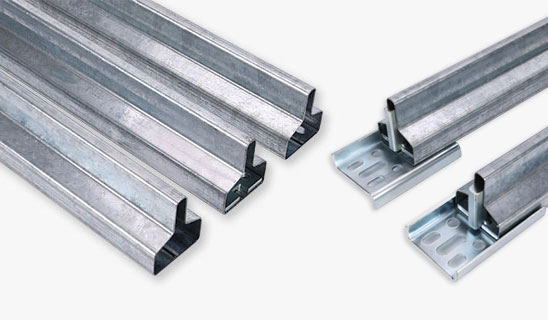
Unlike open profiles, closed-end hollow rails have a closed cross-section that helps limit the entry and accumulation of dust, debris, and moisture around the guide rail assembly.
This can be useful in dusty environments such as factory workshops, ventilated outdoor shafts, or construction sites. Reducing contamination around moving components can help maintain smooth operation and limit wear caused by accumulated debris.
Because of their hollow internal structure, closed-end hollow rails can be lighter than solid rails with similar overall dimensions when designed to meet the required performance.
Elevator guide rails need to be transported, handled, lifted, and positioned during installation. Lower unit weight can make these operations easier and reduce the workload on site.
The lightest rail is not necessarily the best choice. The rail specification should be selected according to the elevator design and manufacturer's requirements.
The hollow section reduces unnecessary material inside the profile. When the required structural performance is maintained, this can improve material efficiency.
For elevator projects requiring a large number of rails, efficient material use can also be considered when evaluating overall purchasing costs.
Closed-end hollow rails are generally manufactured according to defined requirements for cross-sectional dimensions, straightness, surface quality, and dimensional tolerances.
Consistent manufacturing helps maintain product uniformity between batches and makes it easier to match the rails with guide shoes, brackets, and other elevator components. This can be particularly useful for projects involving multiple elevators with standardized specifications.
Closed-end hollow rails can be used in elevator systems where the car or counterweight requires vertical guidance. The appropriate rail depends on the elevator's load, speed, travel height, guiding method, and shaft conditions.
|
Application or Condition |
Key Considerations |
|
Passenger elevators |
Guiding stability, dimensional accuracy, surface quality |
|
Residential elevators |
Installation space, weight, transportation and handling |
|
Freight elevators |
Load, stiffness, long-term stability |
|
Counterweight systems |
Rail dimensions, installation accuracy, guide shoe compatibility |
|
Standardized elevator projects |
Consistent specifications, machining accuracy, supply stability |
|
Space-limited shafts |
Cross-sectional dimensions and installation method |
Closed-end hollow rails are not automatically suitable for every elevator project. High-speed elevators, heavy-load elevators, and special applications may have higher requirements for rail stiffness, strength, and installation accuracy. These factors should be assessed as part of the overall elevator design.
Guide rail selection should start with the elevator itself. Car weight, rated load, operating speed, and the rail mounting method can all affect the required rail specification.
Before purchasing, confirm the rail model, cross-sectional dimensions, length, material, and relevant dimensional tolerances. The closed-end hollow rail should match the elevator design and related components.
Guide rails work together with guide shoes, so straightness, surface condition, and dimensional accuracy can affect elevator operation.
Visible deformation, burrs, scratches, or dimensional deviations may make installation and alignment more difficult and can affect smooth operation. For this reason, manufacturing processes and quality control should be considered alongside the material itself.
Although closed-end hollow rails can offer a weight advantage, installation still depends on rail length, handling methods, shaft space, and bracket layout.
For larger projects, it is useful to confirm packaging, transportation, on-site storage, and installation requirements before ordering. This helps avoid problems caused by mismatched specifications or unsuitable handling arrangements.