
Der Grundstein für unseren Erfolg
The main difference between a Solid Connecting Plate and a Hollow Connecting Plate lies in the type of elevator guide rail and connection structure they are designed to match. A Solid Connecting Plate is mainly used with solid elevator guide rails, while a Hollow Connecting Plate is designed to match the cross-section and connection structure of hollow guide rails.
Both types are used to connect adjacent guide rail sections and help maintain a properly aligned rail joint. Therefore, selecting a connecting plate should not be based on appearance or weight alone. The guide rail type, model, dimensions, bolt-hole arrangement, and project-specific technical requirements should all be considered.
| Comparison | Solid Connecting Plate | Hollow Connecting Plate |
|---|---|---|
| Matching guide rail | Solid elevator guide rail | Hollow elevator guide rail |
| Main function | Connect adjacent solid guide rail sections | Connect adjacent hollow guide rail sections |
| Structural design | Matched to the cross-section and connection dimensions of solid guide rails | Matched to the cross-section and connection structure of hollow guide rails |
| Selection factors | Guide rail model, dimensions, bolt-hole arrangement, etc. | Guide rail model, dimensions, bolt-hole arrangement, connection structure, etc. |
| Main requirement | Reliable connection and compliance with design requirements | Reliable connection and compliance with design requirements |
It is also important not to assume that a Solid Connecting Plate is always heavier or stronger than a Hollow Connecting Plate. Material, dimensions, thickness, manufacturing method, and structural design can all affect the mechanical performance of a connecting plate. Actual performance should therefore be evaluated according to the relevant product specifications and technical requirements.
Elevator guide rails are normally assembled from multiple rail sections, and connecting plates are used to join adjacent sections. The dimensions, bolt-hole positions, and structural design of the connecting plate need to match the corresponding guide rail so that the joint can be installed correctly.
For T-type guide rails, relevant standards cover requirements related to guide rail and connecting plate dimensions, geometric tolerances, and surface quality. ISO 8100-33:2022 is specifically relevant to standardized T-type elevator guide rails and their connecting plates.
For projects using T-type solid guide rails, you can refer to a Solid Connecting Plate designed for T-type guide rails. For different solid guide rail models and corresponding specifications, a dedicated Solid Connecting Plate product range can also be reviewed.
First identify whether the project uses solid or hollow guide rails, and then confirm the specific guide rail model. The connecting plate should be selected according to the corresponding rail system rather than by appearance alone.
Compare the guide rail cross-section, connecting plate dimensions, and the number, diameter, and position of bolt holes. Proper dimensional matching is essential for correct installation.
A connecting plate forms part of the guide rail joint. Its material, thickness, connection method, and structural design should be evaluated according to the project design, expected loads, and applicable technical requirements.
Choosing the correct connecting plate is only one part of the installation process. Guide rail ends, connecting plates, and fasteners need to fit correctly, while the rail alignment should be checked according to project requirements. Proper installation helps maintain the continuity and alignment of the guide rail system.
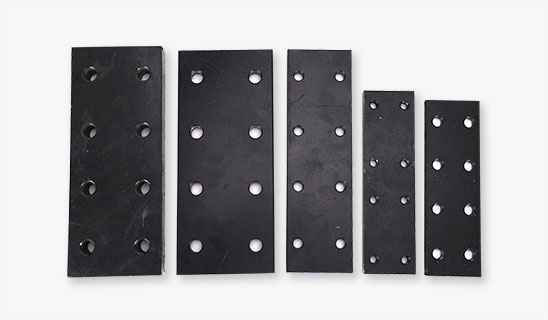
The key difference between a Solid Connecting Plate and a Hollow Connecting Plate is the guide rail structure they are designed to match. Solid Connecting Plates are mainly used with solid guide rails, while Hollow Connecting Plates are matched with hollow guide rail systems.
When selecting an elevator guide rail connecting plate, consider the guide rail type and model, cross-sectional dimensions, bolt-hole arrangement, material, structural design, and project requirements. Rather than assuming one type is universally better, the connecting plate should be selected according to the specific guide rail system and applicable technical requirements.